
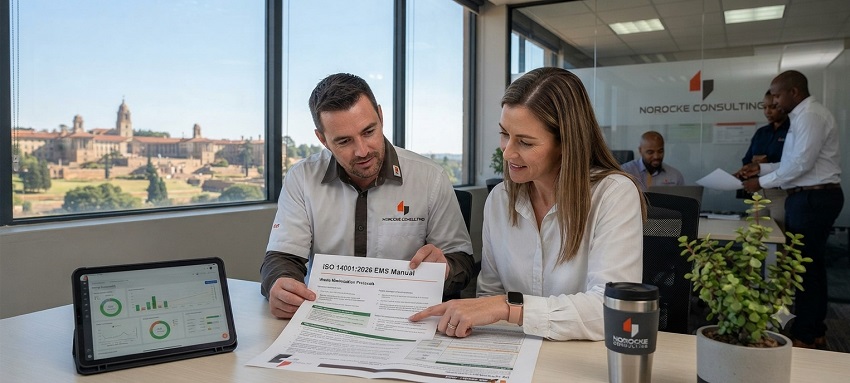
In an era where environmental stewardship is no longer optional but a business imperative, South African companies are increasingly turning to ISO 14001 to navigate the complex landscape of sustainability.
Download Free Guide for ISO 14001 – Environmental Management System (EMS)
Whether you are in manufacturing, mining, or the services sector, implementing an Environmental Management System (EMS) is more than just a “green” initiative—it is a strategic move to boost competitiveness, ensure regulatory compliance, and build long-term resilience.
What is ISO 14001?
ISO 14001 is the world’s leading international standard for Environmental Management Systems. It provides a structured framework for organizations to identify, manage, and reduce their environmental impact.
As of 2026, the updated standard, ISO 14001:2026, continues to emphasize the “Plan-Do-Check-Act” (PDCA) cycle, ensuring that environmental management isn’t a one-time project but a process of continuous improvement.
Why Implement it in South Africa?
South African businesses face unique pressures, from tightening local environmental legislation to the demand for sustainability from international trade partners. Here is why ISO 14001 is a game-changer:
-
Regulatory Peace of Mind: South Africa has rigorous environmental laws. ISO 14001 provides a systematic way to track and maintain compliance, significantly reducing the risk of fines, legal penalties, and operational shutdowns.
-
Cost Optimization: By identifying inefficiencies in energy, water, and waste management, companies can drastically reduce operational expenditures. Sustainability, quite literally, pays for itself.
-
Global Competitiveness: Many international supply chains now require ISO 14001 certification as a prerequisite for trade. Being certified signals to global investors and partners that your business is reliable, responsible, and future-ready.
-
Enhanced Reputation: Stakeholders, including local communities and customers, increasingly value transparency. Certification proves your commitment to the planet, boosting your brand image and customer loyalty.
5 Steps to Implementation
Successfully implementing an EMS in your South African facility requires a structured approach:
-
Management Commitment: Secure buy-in from senior leadership. Without visible support from the top, the EMS will struggle to gain traction across the organization.
-
Environmental Review: Conduct a baseline assessment. Identify your facility’s environmental aspects—such as chemical handling, emissions, and waste streams—and understand their potential impact.
-
Define Your Scope & Policy: Develop an environmental policy tailored to your specific operations. This sets the tone for your goals, from resource conservation to pollution prevention.
-
Operational Controls: Standardize processes for waste disposal, energy consumption, and emergency response. Ensure your team is trained and empowered to follow these new procedures.
-
Audit & Refine: Use the PDCA cycle. Conduct regular internal audits to find gaps, and use that data to fix non-conformities and improve performance year over year.
The Path Forward
Implementing ISO 14001 is a journey. It requires a shift in company culture where every employee understands their role in protecting the environment.
While the process involves time and resource investment, the long-term benefits—lower costs, reduced risks, and a stronger market position—make it one of the most valuable investments a modern South African business can make.
Are you ready to start your journey toward ISO 14001 certification?
Consider this: What is the single biggest environmental “pain point” (e.g., waste, energy costs, or regulatory reporting) that your team currently faces, and how could a standardized system help you solve it?